
Gardener Nation
Hyssopus officinalis
Hyssopus officinalis
Couldn't load pickup availability
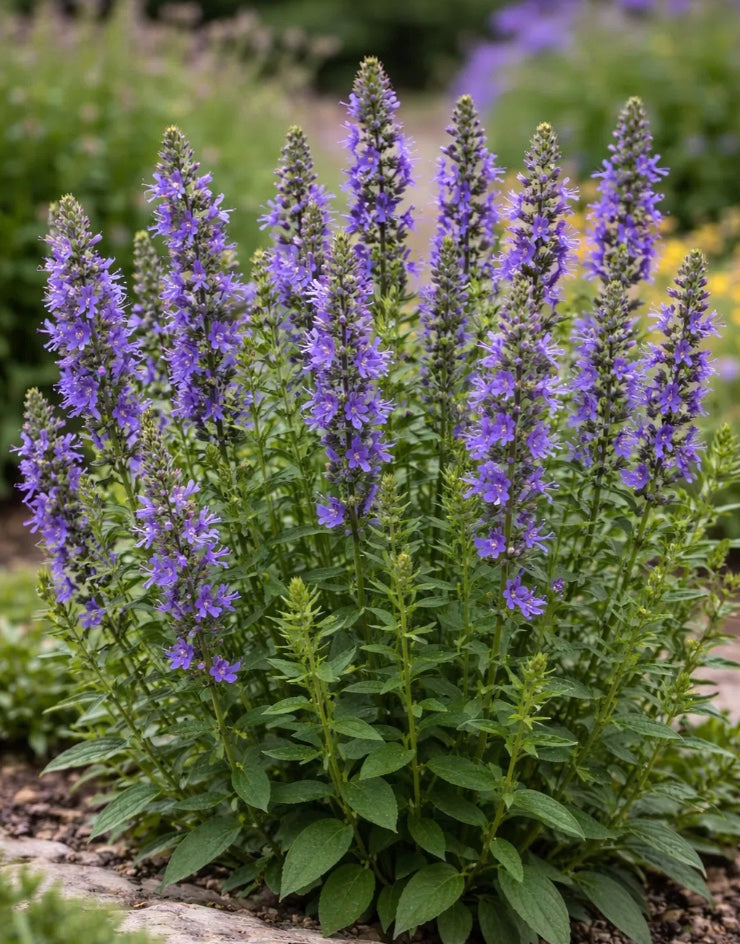
Hyssopus officinalis, commonly known as Hyssop, is a fragrant herbaceous perennial or semi-evergreen subshrub that produces upright spikes of small tubular flowers in rich blue, violet-blue, pink, or white tones. The blooms are held above narrow, aromatic, dark green leaves, creating a tidy, upright, and refined appearance in the garden. Blooming from midsummer into early fall, this plant adds colour, fragrance, texture, and excellent pollinator value to borders, herb gardens, cottage gardens, rock gardens, or sunny perennial beds.
Thrives in well-drained soil with dry to medium moisture. Avoid planting in heavy, wet, or waterlogged conditions. Requires minimal maintenance once established and shows excellent heat and drought tolerance. Deadhead spent flower spikes to encourage prolonged flowering and maintain a tidy appearance. Prune lightly after flowering or in early spring to keep the plant compact and prevent woody growth. Pairs well with lavender, salvia, thyme, echinacea, and ornamental grasses for a fragrant, drought-tolerant garden display. Attracts bees, butterflies, hummingbirds, and other beneficial pollinators. Generally avoided by deer and rabbits. Excellent for sunny borders, herb gardens, cottage-style landscapes, rock gardens, edging, containers, or low-maintenance perennial plantings. Hyssopus officinalis is a dependable and aromatic perennial that thrives in sunny gardens, adding upright flower spikes and fragrant foliage through the summer season. Its drought tolerance, compact habit, and outstanding appeal to pollinators make it a valuable choice for herb gardens, wildlife-friendly landscapes, and dry sunny sites.
Sun Requirements:
Full Sun. Performs best in full sun, where it develops strong stems, aromatic foliage, and the most abundant flowering.
Maximum Growth Height:
18–24 inches (45–60 cm), with a spread of about 12–18 inches (30–45 cm).
Bloom Month:
July to September. Blooms from midsummer into early fall, producing blue to violet-blue flower spikes that provide long-lasting seasonal colour and attract many beneficial pollinators.
Share